
Buffalo Bills Injuries: The Ultimate Training Camp 2026 Health Report
Football is almost back. The Buffalo Bills report for training camp on July 21, and less than two months later they’ll kick off the 2026 season on September 13 in Houston, Texas.
Before the pads come on and everyone starts declaring themselves “100%,” let’s take a look under the hood.
This is your complete Buffalo Bills injury report heading into training camp, a medical manifesto, covering every notable injury, surgery, rehab update, and recovery timeline that could impact the season. Better yet, we’ll rank each player from most concerning to least concerning, so you know exactly who deserves your attention before camp gets underway.
Now let’s see who’s ready to hit the ground running… and who’s still trying not to pull anything.
ThighDoctor Panic Meter™
| Player | Injury | Panic Meter™ |
|---|---|---|
| Dorian Strong | Neck | ⭐⭐⭐⭐⭐ |
| Dalton Kincaid | PCL | ⭐⭐⭐⭐☆ |
| Tyrell Shavers | ACL | ⭐⭐⭐⭐☆ |
| Michael Hoecht | Achilles | ⭐⭐⭐☆☆ |
| Tyler Bass | Sports hernia | ⭐⭐⭐☆☆ |
| Terrel Bernard | Ankle | ⭐⭐⭐☆☆ |
| Joshua Palmer | High ankle/MCL | ⭐⭐⭐☆☆ |
| Spencer Brown | Back/Shld. | ⭐⭐⭐☆☆ |
| Ed Oliver | Biceps + Knee | ⭐⭐☆☆☆ |
| DeWayne Carter | Achilles | ⭐⭐☆☆☆ |
| Landon Jackson | MCL/PCL | ⭐⭐☆☆☆ |
| Cole Bishop | Knee | ⭐⭐☆☆☆ |
| Dorian Williams | Knee | ⭐⭐☆☆☆ |
| Jordan Hancock | Shoulder | ⭐⭐☆☆☆ |
| Skyler Bell | Hamstring | ⭐⭐☆☆☆ |
| Josh Allen | 5th Metatarsal | ⭐☆☆☆☆ |
| Khalil Shakir | Ankle | ⭐☆☆☆☆ |
| Christian Benford | Wrist | ⭐☆☆☆☆ |
| Dion Dawkins | Foot | ⭐☆☆☆☆ |
| Joe Andreessen | Quad | ⭐☆☆☆☆ |
Disclaimer: The ThighDoctor Panic Meter™ is not a prediction of who will miss the most games. It’s my medical opinion on each player’s injury heading into training camp, taking into account recovery timelines, recurrence risk, expected performance, and long-term durability.
Dorian Strong — Neck Surgery
Concern Level: ★★★★★ (Very High)
Dorian Strong’s rookie season was cut short by a serious neck injury that ultimately required surgery after the season. While the Bills have remained tight-lipped about the exact procedure, the fact that Strong was seen in a neck brace for an extended period makes this far more concerning than the typical cervical issues seen in the NFL. Based on the timeline and severity, it’s reasonable to suspect either a multilevel cervical fusion or another significant stabilization procedure, though that’s ultimately speculation until more details emerge.
Unfortunately, this is one injury where the concern extends well beyond the 2026 season. The Bills waived Strong with an injured designation, he cleared waivers, and was subsequently placed back on injured reserve. This is a transaction that feels eerily similar to what the team did with Tommy Doyle, who spent another year on IR before ultimately retiring. While Strong’s football future remains unknown, the fact that he’s guaranteed to miss at least this season makes this the most concerning injury on Buffalo’s roster. More importantly, the hope now shifts from when he’ll return to whether he’ll be medically cleared to play football again.
Dalton Kincaid — Left PCL Injury
Concern Level: ★★★★☆ (High)
Dalton Kincaid may have the most fascinating injury story on the Bills’ roster because the biggest concern isn’t what he had done, it’s what he didn’t. Kincaid has battled a left PCL injury for the past two seasons, first suffering it in 2024 and missing four games. Before the injury, he was playing roughly 60% of Buffalo’s offensive snaps. After returning, that number fell to around 40%, and it never truly recovered. In 2025, he surprisingly remained around a 40% snap player until a hamstring injury sidelined him for five games. During that rehab, he aggravated the same PCL, returned to just 30% of the snaps, and even missed another game in Week 17 because of the knee. He did show encouraging signs in the playoffs, climbing back to a 45% snap share, but the pattern is hard to ignore.

So why not just fix it surgically? Ironically, not having surgery was probably the right call. Unlike ACL reconstructions, PCL surgery is technically demanding, with major blood vessels and nerves lying directly behind the knee, and historically the outcomes have been poor. For many isolated PCL injuries, aggressive rehabilitation remains the preferred option. The encouraging news is Kincaid appears to have attacked his rehab, reportedly adding 10–12 pounds of muscle this offseason in an effort to better support the knee. That added strength could finally unlock the player Bills fans have been waiting for, but until he proves he can stay on the field and maintain his workload, the risk of another aggravation will continue to hang over one of Buffalo’s most intriguing offensive weapons.
Tyrell Shavers — Left ACL Reconstruction
Concern Level: ★★★★☆ (High)
Tyrell Shavers underwent a left ACL reconstruction at the end of January after tearing his ACL during Wild Card Weekend. The timing of the injury is everything here, making his absence from OTAs and mandatory minicamp completely expected. While the traditional return-to-play timeline following ACL reconstruction is 9–12 months, recent advances in rehabilitation have allowed many NFL players to safely return closer to the 9-month mark. There have been no reports of any setbacks, putting him on track for a potential return sometime around November or December.

The bigger question isn’t when Shavers will be medically cleared, it’s when the Bills will actually activate him. As a depth receiver who likely isn’t at the top of the pecking order, Buffalo can afford to be patient and let need dictate his return. If the receiving corps stays healthy and productive, there’s little incentive to rush him back. That’s probably the smartest approach, too. Research has shown athletes face nearly a 30% risk of sustaining another ACL injury within the first two years after reconstruction, with the risk gradually declining as more time passes. In Shavers’ case, every extra week of recovery may pay dividends, making a late-season return, or even waiting until 2027, the safer long-term investment.
Michael Hoecht — Right Achilles Tendon Repair
Concern Level: ★★★☆☆ (Moderate)
Michael Hoecht’s 2025 season lasted just six quarters before a ruptured Achilles tendon required surgical repair in early November. The encouraging news is that his rehab appears to be right on schedule, as he has already been seen running during OTAs and has looked to be in good spirits throughout the offseason.
The typical return-to-play timeline following an Achilles repair is 9–12 months (Lemme et al.), putting Hoecht at roughly 10 months post-op when the Bills open the season in Houston. Barring any setbacks, he appears on track to be cleared for Week 1, though don’t be surprised if Buffalo manages his workload throughout training camp to ease him back into football activities and minimize the risk of overloading the repaired tendon.
Tyler Bass — Sports Hernia Repair (Left Side)
Concern Level: ★★★☆☆ (Moderate)
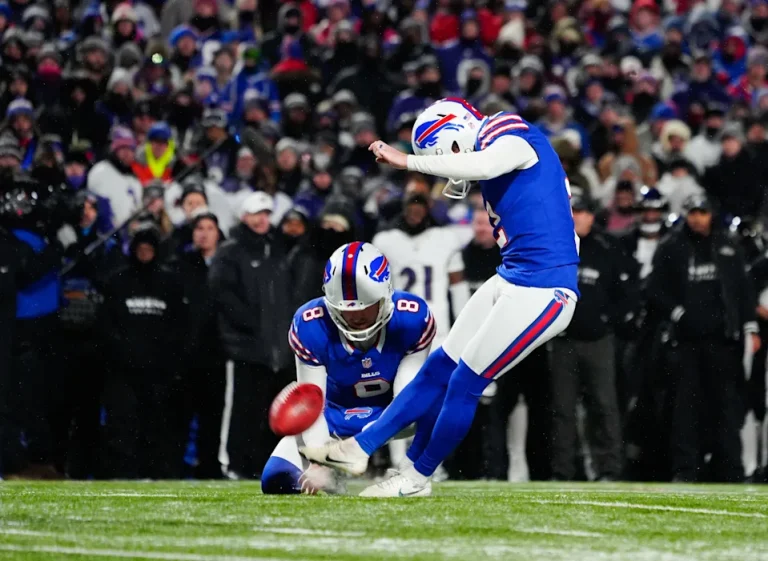
Tyler Bass missed the entire 2025 season after undergoing sports hernia surgery in November, giving him plenty of time to recover before training camp. From a medical standpoint, there is little reason for concern, as most NFL players return to full function within 8–12 weeks following surgery (Jack et al.) and go on to perform at their previous level.
The question isn’t whether Bass will be healthy, it’s whether he’ll be worse. Accuracy was already trending in the wrong direction, converting just 82.75% of his field goal attempts over the 2023 and 2024 seasons, which is below the league average. While sports hernia repairs generally have excellent outcomes, kicking is a uniquely demanding motion that places tremendous rotational stress through the core and pelvis. Interestingly, the few NFL kickers with documented sports hernia surgeries—David Akers, Lawrence Tynes, and Matt Gay—all experienced some degree of decline afterward. Bass was also notably absent from kicking during OTAs and mandatory minicamp, though that may have simply been part of a cautious progression. The good news for Bass is that the Bills have yet to bring in any competition, as he remains the only kicker on the roster. That’s far from definitive evidence that he’ll struggle, but it’s enough to make this one worth monitoring. The Bills can live with a healthy Tyler Bass, but they’ll need him to be a more accurate one.

Terrel Bernard — Right Ankle Reconstruction (Presumed Modified Broström Procedure)
Concern Level: ★★★☆☆ (Moderate)
While the Bills have not confirmed the exact procedure, all signs point to Terrel Bernard undergoing a lateral ankle reconstruction (Modified Broström procedure) to address the ankle instability that’s bothered him over the past several seasons. The typical return-to-play timeline is 4–6 months (Li et al.), and the procedure boasts an excellent track record, with 89–93% of competitive athletes (Goru et al.) returning to their previous level of play. Hopefully, this finally puts an end to the revolving door of ankle injuries that have followed Buffalo’s defensive captain.
Bernard enters the first season of his four-year extension with plenty of expectations after the Bills made a long-term commitment to him. While there are no major concerns about his availability entering training camp, he’ll still be a player worth monitoring early in the season to ensure the ankle holds up under game-speed demands. If the surgery accomplished what it was designed to do, Buffalo could finally have a healthy Bernard anchoring the middle of its defense for years to come.

Joshua Palmer — High Ankle Sprain / MCL Sprain
Concern Level: ★★★☆☆ (Moderate)
Joshua Palmer’s 2025 season was anything but straightforward. He suffered a combined high ankle sprain and MCL injury in Week 6 against Atlanta, missed three games, returned for two, missed another two, then played four straight before logging 84% of the snaps in the meaningless Week 18 finale. Surprisingly, he was then placed back on injured reserve for the postseason. Even more intriguing, Palmer spent OTAs and mandatory minicamp working off to the side with trainers, suggesting he still wasn’t back to full strength more than three months after the season ended.

What’s unusual here is that Palmer didn’t undergo surgery. High ankle sprains and MCL injuries are typically treated without an operation, but it’s uncommon to still be limited this far into the offseason without some type of lingering issue. The expectation is that he’ll be a full participant when training camp opens, but availability has been a recurring theme throughout his career. The Bills don’t need to worry so much about whether Palmer can get healthy, they need to see if he can stay healthy over the course of a full season.
Spencer Brown — Back Surgery & Knee Arthroscopy
Concern Level: ★★★☆☆ (Moderate)
Spencer Brown continues to quietly accumulate one of the most extensive orthopedic histories on Buffalo’s roster. Brown recently revealed he underwent another back surgery during the 2025 offseason, explaining why he missed much of last year’s training camp. Fast forward to this offseason, and he missed all of OTAs and mandatory minicamp after undergoing a knee cleanup procedure, likely an arthroscopic debridement involving his left knee. While the exact procedure wasn’t disclosed, the timeline fits well with a routine arthroscopy that should have him ready for training camp.
The bigger concern isn’t any one injury, it’s the collection of them. Brown’s left leg has a particularly extensive history, beginning with a fractured femur in high school that ultimately required two surgeries, including a cartilage procedure and a meniscus repair. He also underwent right knee surgery in college, in addition to multiple back procedures and a left shoulder labral repair since entering the NFL. None of these injuries should prevent him from being available for Week 1, but together they paint the picture of a player whose long-term durability will always be something to monitor. Buffalo is getting an outstanding right tackle when he’s healthy, they’ll just be hoping they can keep him that way.
Ed Oliver — Left Distal Biceps Repair / Left Knee Arthroscopy
Concern Level: ★★☆☆☆ (Low-Moderate)
Ed Oliver’s 2025 season was derailed by a left distal biceps tendon rupture that required surgery in October, but his road back wasn’t as straightforward as it first appeared. While rehabbing the biceps, he underwent a knee arthroscopy around December 29 to address a separate issue, then remarkably returned to game action just 19 days later, well ahead of the typical 4–8 week recovery timeline. He later exited the playoff game against Denver with a knee injury, and while Buffalo never officially announced another procedure, all signs point to Oliver needing a second offseason cleanup after a brief setback (“oops”) during OTAs before returning as a full participant for mandatory minicamp.
I’m not overly concerned about Oliver’s ability to suit up for Week 1, he should be ready to go. What gives me pause is the bigger picture. If this was indeed his second knee arthroscopy in roughly a year’s time, it’s fair to wonder whether this becomes a recurring maintenance issue rather than a one-time fix. That doesn’t mean he can’t continue playing at a high level, but it does raise questions about his long-term durability and whether the Bills will need to regularly manage his workload to keep one of their most important defensive linemen healthy over the course of a 17-game season and beyond.

DeWayne Carter — Achilles Tendon Repair
Concern Level: ★★☆☆☆ (Low-Moderate)
DeWayne Carter tore his Achilles tendon near the end of August 2025, costing him his entire rookie season. By the time the Bills open the regular season, he’ll have a full year of recovery under his belt, and all signs point to an excellent rehab. Carter was a full participant throughout OTAs and mandatory minicamp, suggesting he’s recovered as well as Buffalo could have hoped.
The one variable worth watching is his body composition. Reports indicate Carter added 25–30 pounds this offseason, which could make him a better fit as a true nose tackle and improve his ability to anchor against the run. However, additional body mass also means greater force transmitted through the Achilles tendon with every sprint, cut, and explosive first step. It shouldn’t keep him off the field, but it does make his workload and durability worth monitoring early in the season as he adjusts to carrying the extra weight.

Landon Jackson — Right MCL/PCL Injury (Post-Surgical)
Concern Level: ★★☆☆☆ (Low-Moderate)
Landon Jackson suffered a significant right knee injury involving the MCL and PCL on November 9 that ended his rookie season. Initially, there was optimism he could return late in the year, but that possibility quietly disappeared. It’s now been reported that Jackson underwent surgery, most likely an MCL repair, a procedure that typically carries a 3–6 month recovery timeline. The good news is he has already been a participant during OTAs and mandatory minicamp, indicating he’s well ahead of schedule for training camp.
The bigger concern isn’t this injury, it’s the growing résumé. Jackson has already torn his left ACL twice, and now adds a surgically repaired right knee to the list, making durability a legitimate question early in his career. To his credit, reports indicate he added 25 pounds of muscle this offseason, which should help him better withstand the physical demands of the NFL. Medically, there are no major concerns about his availability for Week 1, but he’ll need to prove he can finally put together a healthy season before the “injury-prone” label starts sticking permanently.

Cole Bishop — Left Knee Arthroscopy (Presumed Partial Meniscectomy)
Concern Level: ★★☆☆☆ (Low-Moderate)
Cole Bishop was held out of OTAs and mandatory minicamp after undergoing a cleanup procedure on his left knee to address a lingering issue. While the Bills haven’t confirmed the exact surgery, it was likely a partial meniscectomy, a common arthroscopic procedure used to remove damaged meniscal tissue. These procedures typically require 4–8 weeks for a full recovery, and Buffalo had the luxury of letting Bishop fully recover during the offseason rather than rushing him back as they might have during the regular season.
This shouldn’t be an issue entering training camp, and there are no expectations that it will affect his availability for Week 1. That said, any surgery involving the meniscus deserves at least a footnote. While players routinely return to full performance after a partial meniscectomy, removing even a small portion of the meniscus can increase the risk of cartilage wear and degenerative changes over time. It’s not something Bills fans should worry about this season, but it does add a small black mark to Bishop’s long-term knee health.
Dorian Williams — Bilateral Knee Fracture (updated 7/29/26)
Concern Level: ★★☆☆☆ (Low-Moderate)
Dorian Williams was one of the more intriguing injury mysteries of the offseason after missing all of OTAs and being spotted on crutches. Head coach Joe Brady simply acknowledged “… I mean injuries are going to happen in season or offseason” , while beat reporters noted Williams wasn’t wearing a boot or knee brace. We now know the issue was actually a bilateral knee fracture, although the exact bones involved and mechanism of injury remain unclear. Honestly, I’m still trying to figure out how someone fractures both knees and is back to full participation this quickly, but whatever happened, it clearly wasn’t as severe as the wording initially makes it sound.
The good news is that Williams is already back as a full participant in training camp, which essentially puts this one in the rearview mirror heading into the season. The original concern was that he had undergone some type of knee cleanup, but the fracture diagnosis changes that entirely, and importantly, eliminates the concern we previously had about a partial meniscectomy and its potential long-term cartilage implications. There is still plenty we don’t know about the injury, but with Williams back on the field without restrictions, this looks like a much bigger mystery than it is a problem.
Jordan Hancock — Left Shoulder Surgery (Presumed Labral Repair)
Concern Level: ★★☆☆☆ (Low-Moderate)
Jordan Hancock originally injured his shoulder during the preseason, describing it as a “stinger,” but he managed to play through it for most of the year. Since stingers originate from irritation of the cervical nerves rather than the shoulder itself, surgery wouldn’t typically address that problem. It’s much more likely Hancock underwent a labral repair, though an AC joint procedure remains an outside possibility. Given the timeline and his ability to continue playing throughout the season, a labral repair fits the clinical picture best.

Labral repairs are among the most common shoulder surgeries performed in football players and generally carry an excellent prognosis, with a typical recovery of 4–6 months. Hancock’s participation in OTAs while wearing a non-contact jersey is exactly what you’d expect at this stage of rehab, and barring any setbacks, that restriction should be lifted by the start of training camp. Everything points toward him being fully available for Week 1, with no reason to expect any lingering limitations once he’s cleared for full contact.
Skyler Bell — Hamstring Strain (Presumed)
Concern Level: ★★☆☆☆ (Low-Moderate)
Skyler Bell appeared to suffer a hamstring strain near the end of OTAs, an untimely setback for a rookie expected to compete for playing time this season. On its own, a mild hamstring strain wouldn’t be particularly concerning, and with several weeks before training camp, he should have plenty of time to recover. However, this isn’t Bell’s first run-in with soft tissue injuries. A left hamstring injury derailed much of his freshman season at Wisconsin. He was also limited during the pre-draft process by a quad injury before ultimately posting an impressive 4.40-second 40-yard dash at his Pro Day, it’s just unclear which leg was affected for that injury.
The expectation is that Bell will be fully available when training camp begins, but his history makes this worth monitoring. Hamstring injuries have one of the highest recurrence rates in football, particularly when a player has sustained previous soft tissue injuries. If Bell can put this behind him, it likely becomes a forgotten footnote. If the hamstring starts barking again once practices intensify, however, it could become a recurring obstacle during his rookie season.
Josh Allen — Right Foot (5th Metatarsal Avulsion Fracture)
Concern Level: ★☆☆☆☆ (Low)
Josh Allen underwent a minor procedure shortly after the season to remove a bone fragment following an avulsion fracture of the fifth metatarsal in his right foot. The injury lingered through the second half of the season, but he never missed time and has since appeared to have made a full recovery, participating without limitations throughout OTAs and mandatory minicamp.
There are no concerns heading into training camp or Week 1, as Allen is expected to be fully healthy. The only lingering curiosity is whether his switch to New Balance cleats contributed to the injury, a possibility that’s impossible to prove but fun to debate. Either way, Bills fans can comfortably put this one in the rearview mirror.
Khalil Shakir — Right Ankle Surgery (Presumed TightRope Stabilization)
Concern Level: ★☆☆☆☆ (Low)
Khalil Shakir quietly underwent right ankle surgery this offseason, a procedure that hopefully puts an end to the nagging ankle issues that have followed him over the past few years. While the Bills haven’t disclosed the exact operation, the nature of his previous injuries (particularly his history of high ankle sprains) suggests he likely underwent a TightRope stabilization procedure. Recovery typically falls in the 4–8 week range, giving Shakir ample time to be fully recovered for training camp, and he was already a regular participant in OTAs and mandatory minicamp.
The encouraging part is that TightRope procedures have an excellent track record in the NFL. Once fully healed, players generally return to their pre-injury level of performance without long-term limitations, and the added stability significantly reduces the risk of recurrent high ankle sprains. If anything, Bills fans should view this as a positive, as Shakir could enter 2026 with the healthiest, and most stable, ankle he’s had in years.

Christian Benford — Left Hand/Wrist Surgery (Presumed Scaphoid Fracture)
Concern Level: ★☆☆☆☆ (Low)
Christian Benford spent the early part of the offseason with a cast on his left hand and wrist, and while the Bills never disclosed the exact injury, the location strongly suggests a scaphoid fracture requiring surgical fixation. These injuries are common in football players and typically carry a 1–3 month return-to-play timeline, especially when treated surgically.
Fortunately, this one appears to be a complete non-issue heading into the season. Benford has already been seen participating without any brace, cast, or other protective equipment during OTAs and mandatory minicamp, indicating he’s fully healed. Barring an unexpected setback, this injury shouldn’t have any impact on his availability or performance in 2026.

Dion Dawkins — Lower Leg/Foot
Concern Level: ★☆☆☆☆ (Low)
Dion Dawkins had a brief offseason scare after being spotted in a CAM boot around May 4, raising some eyebrows during OTAs. Fortunately, the concern quickly faded as he was seen out of the boot the following week, and there have been no reports of any lingering issue or need for surgery.
At this point, this looks like nothing more than a minor offseason blip. Whether it was precautionary treatment or a short-lived lower leg or foot issue, everything points toward Dawkins being fully healthy when training camp opens. It’s worth mentioning for completeness, but Bills fans can file this one under “nothing burger.”
Joe Andreessen — Quadriceps Strain (Presumed)
Concern Level: ★☆☆☆☆ (Low)
Joe Andreessen was limited during OTAs, and based on the kinesiology tape visible on his thigh, the injury appeared consistent with a mild quadriceps strain. While the Bills never confirmed the diagnosis, muscle strains of this nature are common during offseason workouts and typically resolve with conservative treatment.
Recovery timelines vary depending on the severity of the strain, but a mild quad injury generally requires around four weeks before returning to full football activities. With plenty of time between OTAs and the start of training camp, Andreessen should be a full participant without any restrictions. As with any muscle strain, the biggest objective will simply be avoiding a recurrence once the intensity ramps up in pads.
Final Diagnosis
As Buffalo reports to training camp, the overall prognosis is encouraging. Most of the players on this list are expected to be available when the pads come on, and several who underwent surgery this offseason appear to be ahead of schedule. The bigger story isn’t who’s injured today; it’s who can stay healthy through a grueling 17-game season.
That leaves a handful of players worth keeping under the microscope. Dalton Kincaid’s lingering PCL injury remains the biggest unanswered question on offense, while Michael Hoecht leads the concern on defense. And, of course, everyone in Buffalo will be rooting for Dorian Strong, whose recovery now extends beyond football.
Training camp has a funny way of creating new injuries just as quickly as it erases old ones. The good news? As of today, the Bills are entering St. John Fisher College healthier than many fans probably realize. The bad news? My business gets a lot busier once the pads come on.